




Brexit threatens price of gas in Ireland
HEG’s Director of Corporate Services, Sandra Quinn speaks to Valerie Flynn of The Times Irish Edition on risks to Irish energy supplies post-Brexit
Charges for importing gas to Ireland are likely to increase when the UK leaves the EU, Ireland’s largest energy procurement consultancy has told its customers.
Last year an agency that administered gas transmission through the Moffat pipeline from the UK to Ireland was abolished, along with its associated charges, under EU cross-border gas network rules. Brexit could result in these charges being reintroduced, while existing UK gas transportation charges will rise, Horizon Energy Group told its clients. Ireland is overwhelmingly dependent on the UK for its natural gas supply.
“Post-Brexit it is likely that UK [gas] transportation costs will increase and continue to increase over time. The Corrib gas field is a finite supply, therefore over time Ireland will be almost 100 per cent dependent on the UK transportation system,” Sandra Quinn, director of corporate services at Horizon, said.
Transportation costs could go from being a fraction of a per cent of the wholesale price of gas, depending on the tariff and time of year, to a few per cent.
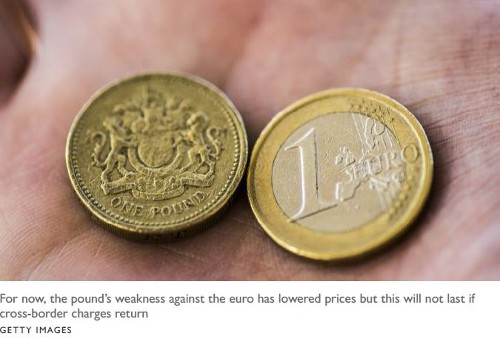
In the short term, businesses with variable energy contracts will feel the benefit of the weaker pound against the euro in their energy bills because Ireland’s gas is purchased in sterling. The currency fluctuation has offset a recent rise in the price of UK gas resulting from a major gas storage facility going offline. However small businesses and households will not enjoy a reduction in their bills as they are locked into fixed contracts.
Horizon also warned that the reform of the cross-border electricity market has been thrown into question by the UK referendum result. The reform, known as I-SEM, is required under EU legislation and is due to be completed by the end of next year. The Commission for Energy Regulation insisted that the reform was not threatened by Brexit.
Horizon said that the UK would no longer be under any legal obligation to implement the changes. If Northern Ireland does not proceed with them there will be an additional liability for the costs, such as new technology investments, in the Republic.
“If we agree that the introduction of I-SEM will cause an uplift in costs to the market and the liability for that cost shrinks to the Republic of Ireland only, then the following result would have to mean an increase in energy costs to the Republic of Ireland,” Ms Quinn said.
John Mullins, chief executive of the renewables developer Amarenco Solar and former chief executive of Bord Gais, agreed that there was “serious doubt” about whether I-SEM would go ahead.
The EU may push for stronger links between Ireland and France’s energy markets in the future. The EU could also impose new conditions on cross-border energy trade between the UK and Ireland, Mr Mullins said.
“For example if Britain decides that because it’s now going to be outside of the EU it will continue to burn coal, the EU will take a very dim view of that and it could put a surcharge on the [UK-Ireland] electricity trade so they don’t burn coal,” he said.
Mr Mullins noted that there were also significant energy security implications for Ireland as there was no underlying treaty guaranteeing UK gas supply to Ireland in the event of a supply shock. The chances of such an agreement are now even more remote.
“It would be completely contrary to the whole sentiment and context of why Britain voted for Brexit — the sovereignty of everything British is going to be British,” Mr Mullins said.